

3 Months’ Salary Ring Rule: What It Means for Ring Prices
The three-month salary rule was never a requirement. If you’re asking whether the 3 months’ salary rule for rings is still a thing, the answer is no: it’s an old spending suggestion, not a standard you need to meet. Your budget can reflect your own finances and priorities.
It’s understandable that a repeated tradition can make the figure feel like an expectation. Its history, however, is rooted in diamond marketing: salary-based suggestions shifted over time, eventually promoting the idea of spending three months’ pay on a ring.
This article traces how that message took hold, explains why it doesn’t determine what a ring should cost today, and explores how lab-grown diamonds can shape a ring budget. You’ll also see how to think about the decision in practical terms, so you can focus on a ring that feels meaningful and financially comfortable rather than following a fixed formula.
Key Takeaways
- The three-month salary guideline is a marketing tradition, not a required spending standard.
- Tracing its evolution helps separate advertising messages from personal expectations around engagement rings.
- Build a ring budget around your finances, priorities, and lifestyle rather than a fixed salary formula.
- Lab-grown diamonds may offer another way to shape your budget while choosing a ring you love.
- Compare ring cuts and diamond options to find a design that feels meaningful and fits your priorities.
What Is the 3 Months’ Salary Engagement Ring Rule?
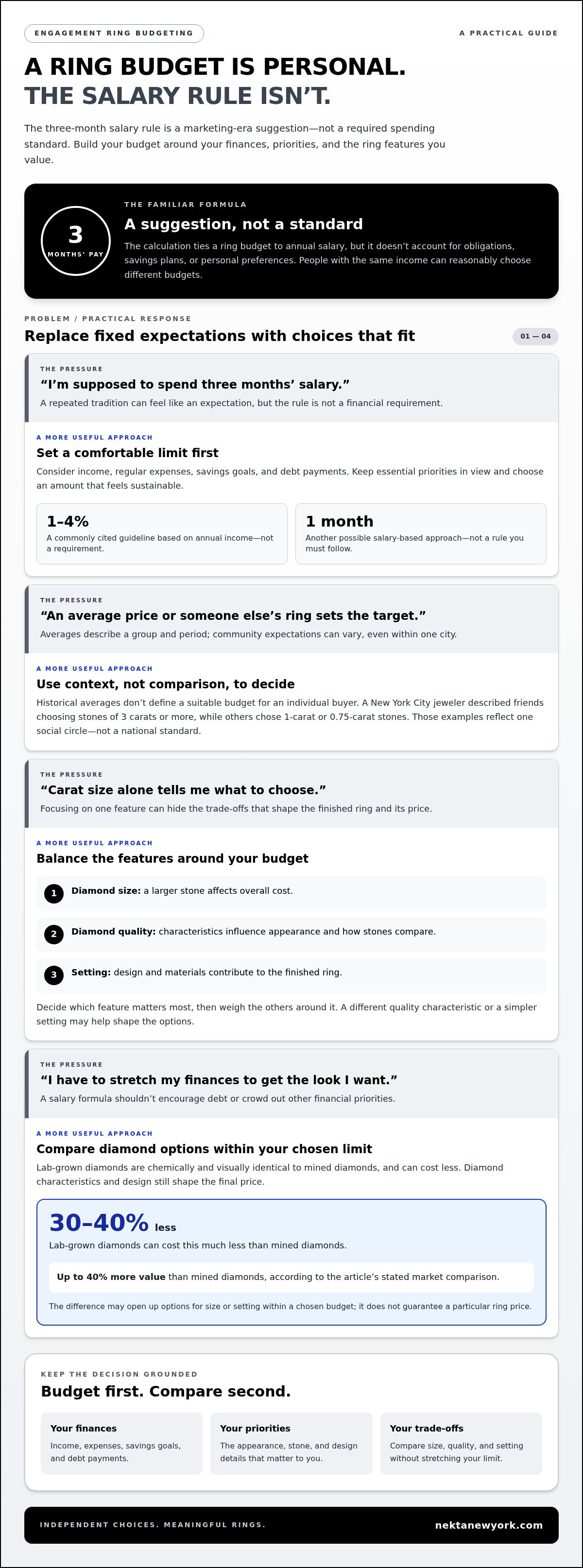
The rule suggests spending three months’ salary on an engagement ring. It’s a spending guideline, not a requirement or a measure of what a ring should cost.
Average Engagement Ring Costs
An average engagement ring cost summarizes spending across a particular group and reporting period. It can offer context, but it doesn’t establish the right budget for an individual buyer. In 2026, there’s no single ring cost that applies to every U.S. buyer. Diamond characteristics, design, and material choices all affect the total.
Recent Average Costs
Average estimates from different years describe different groups and periods, rather than a universal target. The figures reported for 2024 and 2025 illustrate why year matters when comparing averages. The Knot’s 2023 Jewelry and Engagement Study also reported a U.S. average for that year. These historical figures offer perspective, but they don’t define a suitable 2026 budget for you.
Rather than treating an average as a price target, consider what it can and cannot tell you. An average summarizes spending across a group of buyers; your diamond and design choices shape your own purchase. A national figure can’t account for your priorities or financial commitments.
Expert Spending Recommendations
A commonly cited budgeting guideline suggests spending 1-4% of annual income on an engagement ring. This gives buyers a flexible reference point, rather than tying the decision to three months’ salary. The guideline is not a fixed requirement, and your financial priorities matter more than matching a percentage exactly.
For example, someone balancing savings goals with regular expenses may choose to spend less. Another buyer may prioritize a particular diamond or design. Set a comfortable spending limit first, then compare ring options within it. A salary formula shouldn’t encourage debt or crowd out other financial priorities.
Regional and Social Expectations
Yes, spending expectations can vary across the United States, especially between social circles and individual communities. A New York City jeweler described friends choosing diamonds of 3 carats or more, while others chose 1-carat or 0.75-carat stones. That contrast shows how expectations can differ even within one city.
Those examples describe one jeweler’s social circle, not a national standard. Family traditions, personal taste, and priorities can shape expectations just as much as location. Consider your own circumstances instead of treating another community’s choices as a benchmark for your ring budget.
How the Three-Month Rule Works
The calculation uses annual salary to set a ring budget equal to three months’ pay. It sounds precise, but it leaves out existing obligations, savings plans, and personal preferences. Two people with the same income can reasonably choose different budgets because their financial circumstances and priorities differ.
That distinction matters: the rule is a marketing-era suggestion, not a financial standard. A percentage guideline, a personal spending limit, or another approach can help frame your decision. Choose a budget that fits your finances, then weigh the ring’s design and diamond characteristics against it.
Lab-grown diamonds and ring budgets
Lab-grown diamonds can expand the options available within a ring budget. Diamond size and quality, along with the setting, all affect the final price. Compare these elements to identify what matters most to you.
Setting an Affordable Budget
An affordable ring budget is an amount that fits your finances without displacing essential priorities. Start by considering income, regular expenses, savings goals, and any debt payments. A guideline of 1-4% of annual income offers one reference, while spending one month’s salary is another possible approach. Neither is a requirement. Choose a limit that feels sustainable before comparing designs.
Then decide which features deserve priority. You might favor a particular diamond appearance, a more elaborate setting, or a larger stone. Keeping your budget in view helps you make considered trade-offs instead of letting a salary formula dictate the purchase. A ring that fits your plans can be meaningful without matching a prescribed amount.
Price Factors in Ring Choices
Diamond size, quality, and setting each influence an engagement ring’s price. A larger stone affects the overall cost, while a diamond’s quality characteristics influence how it looks and compares with other stones. The setting’s design and materials also contribute to the finished ring. These factors work together, so changing one can affect the options available in another.
With a set budget, decide which feature matters most, then weigh the others around it. For instance, you could prioritize a stone’s visual presence while considering different quality characteristics or a simpler setting. This makes comparisons more useful than focusing on carat size alone. The right balance depends on the appearance and design you prefer.
How Lab-Grown Diamonds Affect Budgets
Lab-grown diamonds are chemically and visually identical to mined diamonds, and can cost 30-40% less. That difference may let a buyer consider a different size or setting while staying within a chosen budget. The savings are not a guarantee of a particular ring price; diamond characteristics and design still shape the final cost.
Compare options by the qualities you value, not by origin alone. Consider how each diamond’s appearance, size, and setting serve your preferences. Lab-grown stones can also offer up to 40% more value than mined diamonds, according to the stated market comparison. That makes them worth considering for buyers who want to balance visual priorities with spending.
Keep the budget steady as you compare combinations, and adjust the design choices rather than stretching your finances. To explore diamond choices alongside these factors, compare diamond options.
The De Beers marketing origins of the rule
The three-month guideline grew from advertising, not from a financial standard. De Beers marketing helped link diamond engagement rings with expectations about spending.
De Beers Marketing Campaign
De Beers launched a diamond engagement-ring campaign during the Great Depression in the 1930s. Its advertising promoted diamonds as symbols of commitment, helping shape how people viewed engagement rings. According to the American Gem Society, the campaign increased diamond sales by 50%. That history matters because it places the salary rule within a commercial message, not an established rule for couples.
The salary suggestion changed over time. Earlier De Beers advertisements proposed spending one month’s salary on a ring. After World War II, the guideline shifted to two months’ salary. By the 1980s, the promoted figure had risen to three months’ salary. Each change attached a new spending expectation to the same personal milestone.
Diamond Advertising Origins
De Beers diamond advertising presented a ring as part of a larger romantic tradition. Salary-based messaging gave shoppers a simple figure to remember and linked the ring’s perceived significance to its cost. The three-month version is best understood as the result of evolving advertising, not a rule couples must follow.
The message also endured beyond a single campaign. The salary guideline originated in mid-20th-century advertising and received renewed emphasis through marketing in the 1990s. Over time, repetition helped make the suggestion sound customary. Knowing its advertising roots can help readers distinguish a familiar slogan from a personal financial decision.
That distinction helps put the rule in perspective today. An advertisement can influence expectations, but it can’t account for an individual’s income, obligations, or priorities. A couple might value the tradition while choosing a different budget, or reject the salary formula entirely. The progression from one month to two and then three shows that the suggested figure itself was not fixed.
The history also helps explain why the rule can feel authoritative despite being promotional. De Beers tied a memorable salary measure to an emotional occasion, and later advertising reinforced the idea. The American Gem Society’s reported sales increase offers context for the campaign’s commercial impact. That background can help readers weigh outside expectations against their own finances and preferences.
Historical diamond sales and engagement ring trends
Engagement-ring customs changed alongside diamond advertising and sales. The shift is clearest across three milestones: the 1930s campaign, changing salary suggestions, and diamond rings’ prevalence by the end of the 20th century.
De Beers launched a diamond engagement-ring campaign during the Great Depression in the 1930s. The American Gem Society states that the campaign increased diamond sales by 50%. That figure shows the campaign’s commercial impact, while its wider cultural influence developed through repeated advertising messages. A single sales increase cannot explain every couple’s choice, but it helps frame the campaign’s reach.
Salary suggestions also shifted over time. Earlier De Beers advertisements proposed one month’s salary, while later advertisements suggested two months’ salary. By the 1980s, the three-month guideline had become part of the advertising history. These changing recommendations matter because they show that the spending benchmark itself moved, rather than remaining a timeless custom.
By the end of the 20th century, about 80% of engagement rings included diamonds. That figure marks a broad trend in ring composition, not a requirement for every couple. It also helps explain why diamond engagement rings became familiar symbols. A widely repeated advertising message and high diamond presence reinforced the connection between engagement and diamonds.
Still, a popular ring tradition doesn’t make every detail obligatory. The 80% figure describes rings at a particular historical point; it doesn’t prescribe a stone, size, or budget today. Likewise, the change from one month’s salary to two, then three, shows how advertising shaped expectations. A buyer can value a diamond ring without adopting a salary formula.
These historical milestones offer a useful way to read present-day expectations. First, separate the visible custom from its commercial history. Next, decide whether a diamond is personally meaningful. Then set a budget based on individual finances, not a changing advertising suggestion. The 1930s sales campaign, the later salary messages, and the 20th-century ring trend each describe influence, not a rule couples must obey.
The figures also describe different things. The American Gem Society’s 50% sales increase concerns campaign impact. The 80% figure concerns diamond inclusion in engagement rings by the end of the 20th century. Neither number states how much an individual should spend. Keeping those distinctions clear helps turn historical context into practical perspective.
For couples considering a ring today, the lesson isn’t to dismiss tradition but to recognize that traditions can evolve. De Beers advertisements changed their salary guidance, and engagement-ring trends changed over time. Choosing a design and budget that reflect personal priorities makes more sense than treating one historical recommendation as permanent.
Origins of the three-month salary rule
The three-month salary rule came from diamond advertising, not financial planning. Its history shows how a memorable sales message became familiar advice. The guideline changed over time, a key clue that it isn’t a fixed financial standard. Understanding its origin helps separate a commercial suggestion from the personal decision of choosing an engagement ring.
De Beers began promoting diamond engagement rings during the Great Depression in the 1930s. Earlier advertisements suggested spending one month’s salary. After World War II, the promoted guideline shifted to two months’ salary. By the 1980s, the recommendation had risen to three months’ salary. Each step attached a larger income-based expectation to the same purchase, demonstrating the message’s changing marketing role.
The formula made the suggestion easy to apply. For someone earning $45,000 per year, three months’ salary equals $11,250. For someone earning $60,000 per year, it equals $15,000. These examples show how the rule converts income into a ring budget, but they don’t establish what either person should spend. The calculation leaves personal obligations, goals, and preferences outside its frame.
Advertising helped the idea endure by linking a diamond ring with commitment and a specific spending benchmark. The American Gem Society states that De Beers’ campaign increased diamond sales by 50%. That reported impact offers context for the commercial reach of diamond advertising. It doesn’t prove every buyer followed the salary guideline, but it helps explain why such messaging could influence public expectations.
Later advertising reinforced the salary-based message, including campaigns in the 1990s. Yet the recommended amount had already changed from one month to two, then three. That timeline matters more than the formula’s apparent precision. It shows the figure was a promotional suggestion that evolved, rather than a universal custom with one permanent standard. A familiar recommendation can feel traditional without being obligatory.
So, is the 3 months’ salary rule for rings still a thing? It remains a recognizable phrase, but it isn’t a requirement for buying an engagement ring. The origin offers a practical takeaway: treat the rule as advertising history, then make the budget fit your own finances and priorities. Explore diamond choices with that history in mind.
Mike Nekta New York: Round Brilliant Cut Engagement Rings
Mike Nekta New York offers Round Brilliant Cut Engagement Rings for buyers drawn to the cut’s classic, balanced appearance. The collection also includes Cushion Cut, Oval Cut, and Emerald Cut Engagement Rings, giving you distinct shapes to consider alongside your budget and style. Compare the look you prefer, then weigh the diamond and setting choices that matter most to you.
When you’re ready to explore these engagement ring styles, Mike Nekta New York can help you consider which best suits your priorities. The three-month salary guideline doesn’t need to determine your choice. Contact Mike Nekta New York to discuss your preferences and explore ring designs.
Choose a Ring That Reflects Your Priorities
As you move from research to choosing a ring, focus on the qualities you want to see and wear every day. Ask yourself whether the three-month salary rule for rings is still a thing, then make a decision based on personal meaning rather than outside pressure. A clear sense of your priorities can make comparing designs more purposeful.
Think about the style that feels most like you, the details you value, and a budget that fits your plans. These choices can turn a broad search into a considered decision, without making a formula the measure of your commitment.
When you’re ready to explore your preferences with a jeweler, contact Mike Nekta New York. Take the time you need to choose with confidence, and let your ring reflect the story you want it to tell.
Frequently Asked Questions
Can I get a quality ring for less?
Yes, a quality ring can fit a budget below the three-month guideline. Consider lab-grown diamonds, which are chemically and visually identical to mined diamonds and can cost 30-40% less. You can also compare diamond characteristics and setting designs to decide which details matter most. For example, prioritizing the appearance you love over a larger stone may help you find a ring that suits your budget and preferences.
Does the 3 Month Rule Still Apply Today?
No, the three-month guideline isn’t a requirement for buying an engagement ring. It’s a salary-based suggestion shaped by advertising, not a rule couples must follow. A more useful approach is to set a spending limit around your current financial priorities, such as savings goals and regular expenses. If you and your partner prefer a percentage guide, one suggested range is 1-4% of annual income.
How can I decide on a ring budget with my partner?
Start with an open conversation about what each of you values and what spending feels comfortable. Agree on a maximum before browsing, then discuss priorities such as diamond appearance, setting, or design. One partner, for example, may care most about the stone’s shape, while the other prefers a simpler setting. A shared limit makes it easier to weigh those preferences without reducing the decision to a salary calculation.
How much do most people spend today?
There isn’t one spending amount that represents every couple or sets the right target for you. Reported averages vary by survey and year, so treat them as context, not a prescription. Decide what fits your finances and priorities. If comparing your budget with an average, first consider whether the figure covers similar buyers and the same period. Your budget should reflect your own circumstances.
Is There an Average Cost of an Engagement Ring?
Yes, engagement-ring averages are reported, but they vary by survey, year, and group measured. An average describes a sample, not a recommended budget or a promise of what a particular design will cost. Diamond characteristics and setting choices affect individual ring prices. Use an average for broad market context, then compare the features you value with the amount you’ve chosen to spend.
What Is the 3 Month Rule for Wedding Rings?
The three-month salary suggestion refers to engagement rings, not a universal spending rule for wedding bands. An engagement ring is typically chosen for a proposal, while wedding bands are exchanged as part of a marriage ceremony. If you’re budgeting for both, treat them as separate decisions and consider their combined effect on your finances. Discuss each ring’s design and significance with your partner before settling on amounts.
Why Many Couples Ignore the Salary Rule?
Couples may set the guideline aside because it doesn’t reflect individual income, financial commitments, or shared plans. Someone saving for a home, paying down debt, or prioritizing other goals may prefer a different spending limit. Others may choose a lab-grown diamond or a distinct setting to suit their preferences. The decision can reflect the couple’s values instead of an advertising-era formula.
Is the three months' salary rule for engagement rings still common?
If you’re asking whether the three-month salary rule for rings is still a thing, it remains a recognizable idea, but it isn’t a required standard. Its familiarity comes from diamond advertising, while couples make their own budget choices. You can acknowledge the tradition without following it. A conversation about finances, design preferences, and shared priorities offers a more personal basis for deciding what to spend.