
Messika Diamond Move Jewelry or a Bespoke Everyday Bracelet
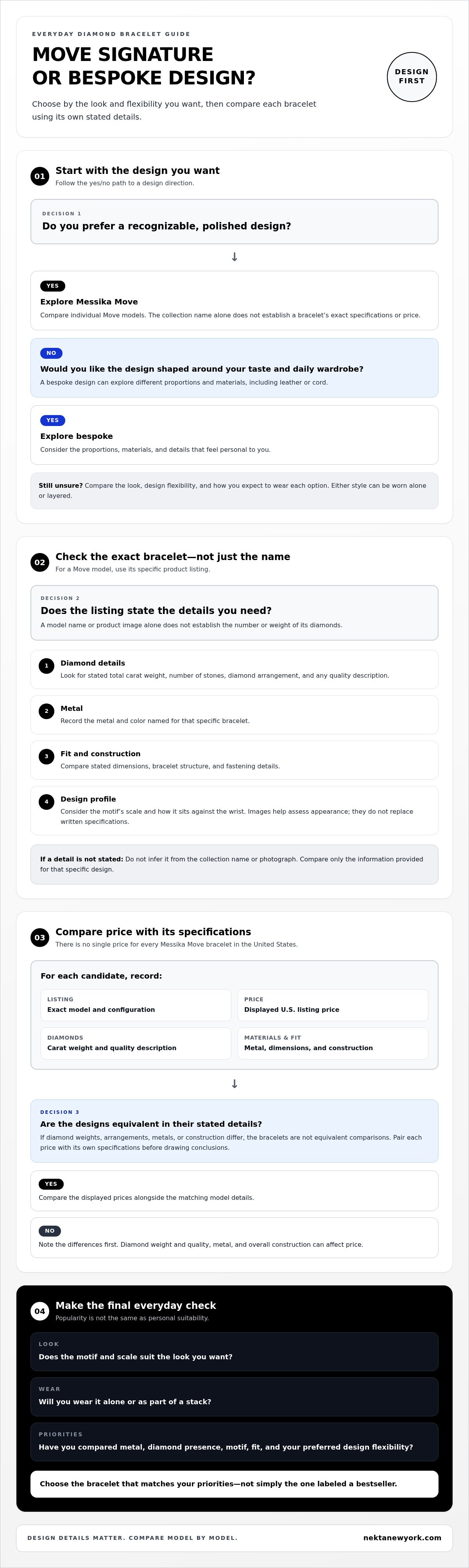
A distinctive bracelet isn’t automatically the better everyday choice. The Messika Diamond Move jewelry vs bespoke everyday diamond bracelet comparison comes down to whether you prefer a recognizable, polished design or a piece shaped around your taste and daily wardrobe. Bespoke designs can explore different proportions and materials, including leather or cord, while either style can be worn alone or layered.
It’s natural to want a bracelet that feels special yet comfortable enough to wear often. The right choice depends on the look you’re drawn to, how much flexibility you want in the design, and whether you expect to wear it alone or as part of a stack.
This guide compares the design and everyday styling of Move jewelry and bespoke bracelets. It also covers leather and cord options, stacking ideas, and details to consider when choosing a diamond bracelet that feels personal.
Key Takeaways
- Compare Move bracelet designs by their signature look and the details of the specific model, rather than assuming every piece shares the same specifications.
- Understand how diamond quality, carat weight, metal, and construction can influence a bracelet’s price and everyday feel.
- See how bespoke designs can reflect personal preferences, from the bracelet’s proportions to leather or cord details.
- Explore ways to wear a diamond bracelet on its own or stack it while keeping the overall look balanced.
- Learn how Mike Nekta New York’s round brilliant, cushion, oval, and emerald cut engagement rings can help you explore diamond styles for a different kind of jewelry decision.
What are the best-selling Messika Move diamond bracelets and their specifications?
A “best-selling” label can help narrow a shortlist, but it doesn’t tell you a bracelet’s precise specifications. For Messika Move jewelry, compare individual product listings instead of assuming every design shares the same configuration. The messika diamond move jewelry vs bespoke everyday diamond bracelet comparison is most useful when you assess each option by its stated materials, diamond details, and proportions.
Start with the exact model name on the listing. Then review the description for its diamond arrangement, setting, metal, and dimensions. Two bracelets with a similar Move look may differ in these details, changing how each appears on the wrist. A model name alone doesn’t establish the number or weight of the diamonds, so rely on the information for that specific design.
- Diamond details: Look for stated total carat weight, number of stones, and any diamond quality description.
- Metal: Record the metal and color named for that specific bracelet.
- Fit and construction: Compare stated dimensions, bracelet structure, and fastening details.
- Design profile: Examine the motif’s scale and how it sits against the wrist in product images.
Compare two listings side by side, noting whether their diamond arrangements and dimensions match. A bracelet with one central detail creates a different impression from a design with repeated accents. Look closely at the setting and clasp, then read the full product description. Images can help you assess appearance, but they don’t replace written specifications.
Popularity and suitability are different things. A popular design may attract attention, but its proportions might not fit how you plan to wear it. A delicate profile can suit a minimal look, while a pronounced motif may stand out on its own. The messika diamond move jewelry vs bespoke everyday diamond bracelet comparison should account for your preferred scale and styling, not popularity alone.
Before deciding, note the details that matter most: metal, diamond presence, motif, fit, and whether you plan to wear the bracelet alone or stacked. Apply the same criteria to every option. This helps distinguish a familiar design identity from a bespoke piece tailored to individual preferences. The messika diamond move jewelry vs bespoke everyday diamond bracelet comparison becomes clearer when you assess each bracelet against your priorities, rather than a bestseller label.
How much do Messika Move diamond bracelets cost in the United States?
There isn’t one price for every Messika Move diamond bracelet in the United States. The price depends on the specific model and its listed materials and diamond details. A collection name alone doesn’t establish the price, so compare the listing for the exact bracelet you’re considering. This keeps the comparison grounded in the piece itself, not an assumed range for every Move design.
Start with the model’s current U.S. listing and note the displayed price alongside its specifications. Compare those details with another Move bracelet rather than treating different designs as equivalent. Diamond weight and quality, metal, and overall construction can all affect price. The signature look matters, but it doesn’t replace an assessment of the stated components.
Keep the information together for a useful comparison. For each model, record the listed price, metal, diamond description, total carat weight, and any stated dimensions. If a listing describes a different diamond arrangement or a more substantial design, those distinctions can help explain a price difference. Don’t infer specifications from a photograph or the name “Move.”
- Match the model: Compare the same named design and configuration, not just bracelets from the same collection.
- Read the diamond details: Note the listed carat weight and quality description, since these affect the materials being compared.
- Compare the metal: Record the stated metal and color rather than assuming two similar-looking pieces use the same materials.
- Review the complete listing: Include any stated dimensions and construction details in your comparison.
If two listings show Move bracelets with different diamond weights, their prices don’t compare equivalent pieces. Likewise, comparing a diamond-accented design with one featuring a more extensive diamond arrangement can obscure what drives the difference. Pair each price with its own specifications before drawing conclusions.
The same logic applies to a bespoke everyday bracelet, though design choices shape its final composition. Diamond size and quantity, metal, and details such as leather or cord influence the materials and workmanship involved. A custom design and a signature Move model shouldn’t be compared on price alone. Compare their looks, materials, and stated diamond details against your priorities for daily wear.
To make the choice more concrete, decide whether a recognizable Move motif or a personalized configuration matters more to you. Then compare the exact specifications and displayed price for each candidate. For another perspective on bracelet design, explore diamond bracelet design alongside the details that matter most to your selection.
What materials, diamond grades, and carat weights are used in Messika Move bracelets?
Messika Move bracelets don’t all have the same material or diamond specifications. The exact combination depends on the model, so read its product description for the stated metal, diamond grade, and carat weight. A collection name alone doesn’t establish whether a bracelet uses a specific gold color or diamond quality.
Start with the metal field. A listing may identify a precious metal and its color, such as white, yellow, or rose gold. Treat these as comparison points, not assumptions about every Move bracelet. Metal color affects the overall appearance: white metal creates a cooler contrast with diamonds, while yellow or rose tones have a warmer effect. Use the listed material, rather than a photograph, to guide your comparison.
Next, check how the diamonds are described. Diamond quality can involve color, clarity, and cut, but the product page must state the applicable grades for that specific bracelet. Don’t infer a grade from a bright-looking photograph. Lighting, setting, and image scale can affect appearance; a written grade offers a defined point of comparison. If the listing provides a grading document, match it to the exact piece.
Read carat weight carefully, too. A stated total carat weight refers to the bracelet’s diamonds collectively, not necessarily to one stone. A bracelet with several small diamonds can have the same total weight as one with fewer, larger stones, yet look quite different. Consider the arrangement and motif alongside total weight to understand the design’s presence.
- Metal: Record the stated precious metal and color for each model.
- Diamond grade: Note the listed color, clarity, and cut details, if provided.
- Carat weight: Identify whether the figure describes the bracelet’s total diamonds.
- Arrangement: Compare the number and placement of stones with the stated weight.
For a practical comparison, place two Move listings side by side and record those four details. If one gives a total carat weight but no individual stone weights, treat the total as the relevant figure. If another emphasizes a diamond grade, compare it only with an equivalent description. This keeps your assessment precise without treating different specifications as interchangeable.
These details also clarify the difference between a signature design and a bespoke bracelet. A Move model has a defined configuration; a custom design begins with choices about metal, diamond character, and stone arrangement. Use the specifications that matter most to decide whether a particular bracelet suits your everyday style, rather than relying on the collection name alone.
How much does a custom-made everyday diamond bracelet typically cost in the United States
There’s no single typical cost for a custom-made diamond bracelet across the United States. Its price reflects the chosen diamonds, metal, construction, and design complexity. A slim bracelet with a restrained diamond detail, for example, differs from a piece covered with diamonds. A useful estimate starts with the actual specifications, not the word “bespoke.”
Diamond choices account for a substantial part of the total. A design might use a central stone, several accent diamonds, or a continuous line of stones. Each arrangement calls for different quantities and setting work. Diamond size and quality, and whether the stones match, also affect the materials selected. Compare proposals by their stated diamond details, not just their overall appearance.
Metal and construction matter, too. A precious-metal chain differs from a design incorporating leather or cord. The clasp, setting style, and links affect how the bracelet is assembled. An intricate pattern may require more bench work than a simple line design. These choices help explain why two custom bracelets can have notably different quoted totals.
- Diamond composition: Specify the number, size, quality, and arrangement of the stones.
- Metal selection: Identify the metal and color, since both affect material requirements.
- Bracelet structure: Describe the chain, clasp, setting, and any leather or cord elements.
- Design detail: Distinguish a simple silhouette from a more elaborate motif or setting.
For a clear comparison, define one consistent design before reviewing estimates. For instance, compare proposals for the same bracelet length, metal, diamond layout, and clasp. A proposal for a central diamond and one for a continuous row represent different specifications. Ask for a breakdown of materials and workmanship to make those differences easier to understand.
Include daily wear in the design brief. A low-profile setting is constructed differently from a raised focal stone. Leather or cord also changes the design and its materials. Decide which features are essential before changing the diamond arrangement or metal. This makes trade-offs visible without treating a lower total as an equivalent design.
The cost of a bespoke everyday diamond bracelet follows its specifications, not a universal price. Diamond characteristics, metal, setting, and workmanship shape the estimate. Note the details that matter most, then compare like-for-like proposals. If the design changes, its materials and labor change too, so review the revised specifications alongside the quoted total.
What design and customization options are available for bespoke diamond bracelets
A bespoke diamond bracelet can be designed around its silhouette, diamond placement, materials, and intended use. Start with the overall look: a fine line bracelet feels different from one centered on a focal stone. Leather or cord offers another direction, pairing a diamond detail with a softer, more relaxed material.
Diamond arrangement sets the bracelet’s visual rhythm. A single center stone creates a clear focal point, while a row of diamonds gives the design more continuous sparkle. Scattered accents can feel understated, and a repeating motif adds structure. Consider how the stones look from above and from the side, especially if you’ll wear the bracelet beside a watch.
Shape and setting refine the effect. Round diamonds create a familiar, balanced outline; pear or emerald shapes offer a more distinctive profile. A bezel setting frames a stone with metal, while prongs leave more of its edges visible. These choices affect the design’s appearance and how prominently each diamond stands out.
- Silhouette: Choose a slim line, a central motif, or a bracelet with repeated elements.
- Diamond layout: Decide between a focal stone, continuous row, or spaced accents.
- Materials: Select a metal color, or consider leather or cord as part of the design.
- Setting and fastening: Consider how the diamonds are held and how the bracelet closes.
- Stacking: Plan whether the bracelet should stand alone or complement other pieces.
Metal color can tie a custom design to jewelry already in your collection. A warm-toned metal, for example, can echo a favorite ring, while a cooler tone creates contrast. Leather or cord adds texture, so a small diamond accent may be enough to balance the piece. The right combination depends on the look you want, not a single formula.
Let everyday wear guide the proportions. A low-profile design may sit neatly beside a watch, while a larger motif can become the focal point of a stack. Consider movement, comfort, and whether the fastening feels practical when putting on or removing the bracelet. These details turn a visual idea into a wearable design brief.
To prepare that brief, describe one preferred silhouette, diamond arrangement, metal, and intended styling. A clear example might be a slim bracelet with spaced round diamonds, designed to sit beside a watch. If you’re exploring a diamond bracelet look, explore diamond bracelet options as a reference for comparing overall styles.
Mike Nekta New York: Round Brilliant Cut Engagement Rings
If your jewelry decision extends beyond an everyday bracelet, Mike Nekta New York offers engagement ring styles in Round Brilliant Cut, Cushion Cut, Oval Cut, and Emerald Cut. Each cut has a distinct shape and visual character, giving you a focused way to compare how a diamond suits your preferences.
If you’re considering a ring alongside a bracelet, begin with the diamond shape that feels most personal. A round brilliant has a classic outline, while cushion, oval, and emerald cuts create different silhouettes. Comparing these options can help clarify the style you’re drawn to for a significant piece.
Contact Mike Nekta New York to discuss its engagement ring styles.
Choose the Piece That Feels Like You
The choice in the Messika Diamond Move jewelry vs bespoke everyday diamond bracelet comparison is personal: choose the design that feels at home in your daily life. Picture how you’ll wear it, what you’ll pair it with, and whether you prefer a signature motif or a more individual expression. Those preferences can guide your next jewelry choice, too.
If you’re also considering engagement rings, Mike Nekta New York offers Round Brilliant Cut, Cushion Cut, and Oval Cut Engagement Rings. Exploring diamond shapes can help you refine the style you’re drawn to, whether you’re planning a meaningful gift or considering a future purchase.
Contact Mike Nekta New York to explore the engagement ring options and take your next step with confidence.
Frequently Asked Questions
What should buyers check for diamond quality, craftsmanship, and resale value when choosing a daily-wear bracelet?
Check the specific bracelet’s listed diamond color, clarity, and cut, along with its setting, dimensions, metal, and construction details. The material provides no basis for assessing resale value.
Which is more durable and comfortable for daily wear: Messika Move or a bespoke diamond bracelet?
Neither is stated to be more durable or comfortable. Compare each model’s dimensions, construction, and fastening details. A bespoke bracelet can be tailored in its proportions and materials, including leather or cord.